Dr. Gymbro
←

#cognitive function

1 article
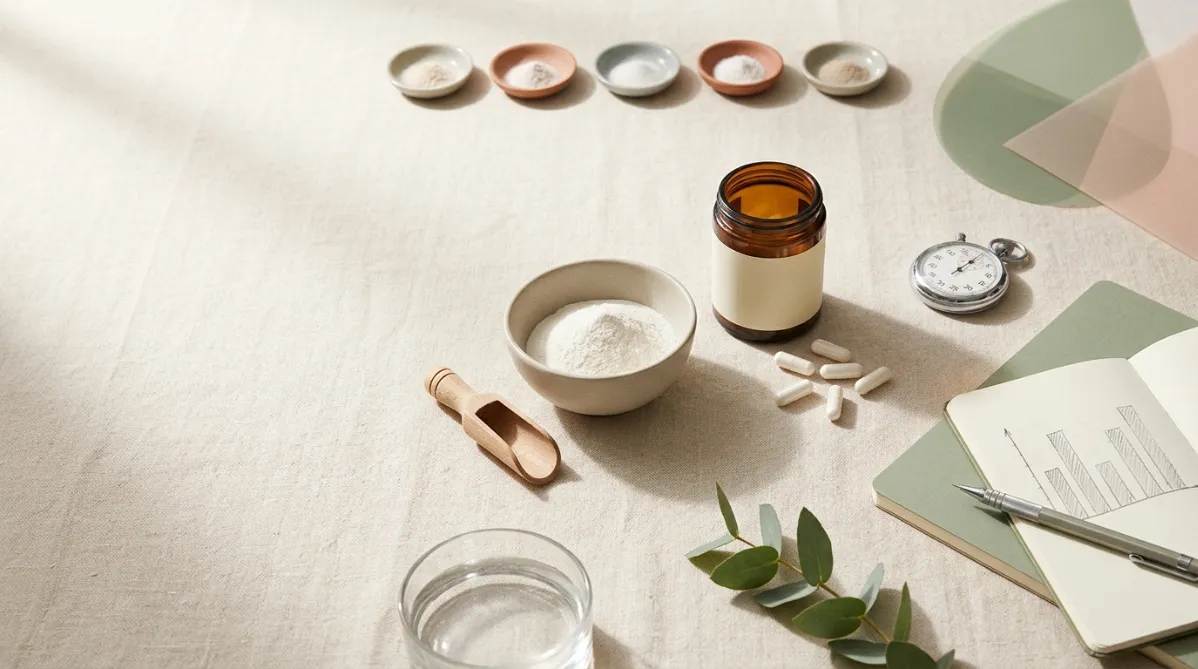
A wide, editorial-style still life photographed from slightly above on a pale oat-colored linen surface, lit by soft morning window light from the left. In the center sits a small matte ceramic bowl holding a mound of fine white powder, with a minimalist wooden scoop resting beside it. Next to the bowl is an open amber glass supplement jar with a plain cream label, and a few white capsules spill across the linen in a loose arc.

To the right, a neatly arranged cluster of analog "study" objects suggests careful measurement: a vintage stopwatch with a clean white face, a slim notebook with a sage-green cover open to a hand-drawn bar chart (blurred, no legible text), and a mechanical pencil lying across the page. A small row of six identical ceramic dishes, each holding a pinch of powder, is lined up along the top edge of the frame to hint at the six-week trial. One dish is slightly out of alignment, a subtle visual cue for ambiguity.

A shallow glass of water and a single sprig of green eucalyptus add a calm, organic note in the foreground. Soft, long shadows fall across the textured linen, and the palette stays restrained: warm cream, soft sage, muted terracotta, pale gray, and touches of amber from the glass jar. A few translucent paper cutouts in two tones (sage and blush) overlap in the upper right corner as a modern graphic accent, evoking overlapping data points without showing any numbers.

Depth of field is shallow, with the bowl and stopwatch in crisp focus and the edges gently softened. The composition leaves generous negative space on the left third for title text overlay. The overall mood is thoughtful, balanced, and quietly skeptical, in the style of a contemporary wellness and science magazine: clean, tactile, minimal, with a subtle film-like grain and natural color grading. No people, no futuristic or sci-fi elements, no readable text or logos.
nutrition

GAA – pojačivač mozga? Rezultati šestonedeljnog ispita su komplikovani

BY DR. GYMBRO ·

GAA, preteka kreatina koja se reklamira kao pojačivač mozga, po prvi put je podvrgnuta ozbiljnoj ljudskoj studiji. U dvosedmičnom, dvostruko‑slepom istraživanju sa 58 zdravih odraslih učesnika primećeni su nešto brži refleksi i povremene promene raspoloženja i stresa. Većina kognitivnih testova nije pokazala nikakve promene, a naslovi su se temeljili pretežno na trendovima. Bezbednosni parametri su bili u granicama normale, ali studija je mala i nema kontrolne grupe koja bi uzimala samo kreatin. Evo šta zaista pokazuje, ko bi mogao imati koristi i zašto je zaključak mešovit.

This page is available in